


2026 Toyota Mirai: Airmont Service & Repair Guide
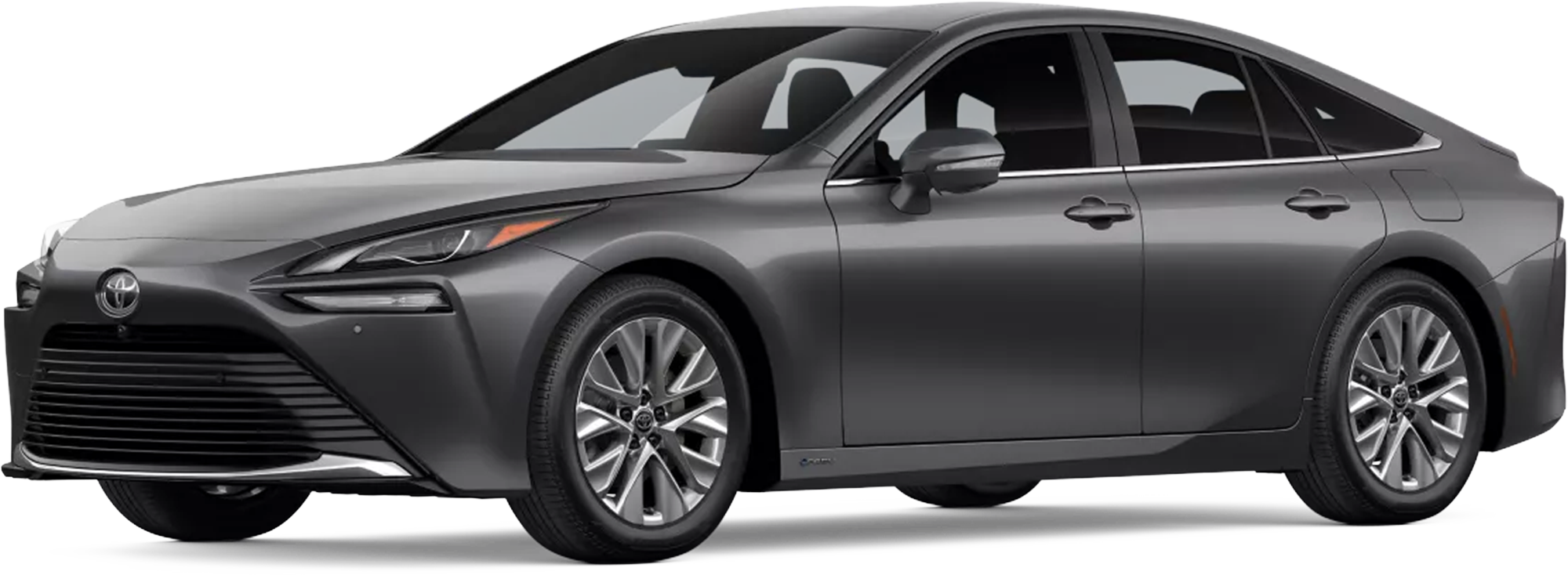
Quick Answer: Servicing a Toyota Mirai in Airmont
A Mirai's maintenance list looks nothing like a gas car's — no oil changes, no spark plugs, no transmission service — because there's no engine to service. What it does need is tire rotations, brake inspections (regenerative braking typically stretches pad life well beyond a conventional car's), cabin air filter changes, and periodic checks of the hydrogen fuel system and high-voltage components, work that requires factory fuel-cell training most Toyota dealers, concentrated as they are outside California, haven't needed to build out. Toyota backs every Mirai with extended ToyotaCare covering scheduled maintenance for 3 years or 35,000 miles, an 8-year/100,000-mile warranty on key fuel cell components, and a 10-year/150,000-mile warranty on hybrid-system components. Given how few Mirais exist on the East Coast, confirm current Mirai-specific service capability with our service team before assuming a routine appointment works the same way it would for a RAV4 or Camry.
What a fuel cell car actually needs
Strip out everything that revolves around an internal combustion engine and you're left with a surprisingly short list: tire rotations and wear checks on the usual 5,000-to-6,000-mile rhythm, brake inspections (the Mirai leans on regenerative braking the same way a hybrid does, which typically extends pad life versus a conventional car), cabin air filter replacement, wiper blades, and the coolant loops that keep the fuel cell stack and power electronics at the right temperature. On top of that sit the checks unique to the powertrain — periodic inspection of the hydrogen storage tanks, fuel lines, and fittings, plus diagnostics on the high-voltage buffer battery and fuel cell stack itself. None of that is DIY territory; it requires the specialized training and equipment Toyota built out for its FCEV-certified technicians, a network that's understandably concentrated where the cars actually are, which today means California far more than New York.
Toyota backs the car generously to offset exactly that uncertainty. Extended ToyotaCare covers scheduled maintenance for 3 years or 35,000 miles — longer than the 2-year/25,000-mile term on Toyota's gas and hybrid models. The powertrain warranty runs 8 years or 100,000 miles on key fuel cell components and 10 years or 150,000 miles on hybrid-system components, on top of the standard 3-year/36,000-mile basic warranty and 5-year/unlimited-mile corrosion coverage every new Toyota carries. Add the up-to-21-days of complimentary rental coverage in the first three years of ownership, and Toyota's own program reads like an acknowledgment that keeping a Mirai running smoothly, this far from the core hydrogen market, takes real support.
The honest local picture
We want to be straightforward here rather than overpromise: fuel cell vehicle service requires a level of specialized certification that most dealerships outside California haven't needed to invest in, simply because so few Mirais are on the road here. If you already own a Mirai — relocated from California, inherited one, or bought used — our service team can tell you exactly what we're equipped to handle in-house today, from the conventional maintenance items above through to what needs to route to a fuel-cell-certified facility. Interstate Toyota's service department has been part of this dealership for years, and the same team that keeps thousands of Camrys, RAV4s, and Corollas running for Airmont and Suffern drivers is glad to have that conversation honestly rather than guess.
What buyers say about our service department
Interstate Toyota's service reviews are consistently strong, and the pattern in them — responsive, communicative, on time — is exactly what you want from any dealer, fuel cell service or otherwise. One recent five-star review: "Leslie was very pleasant and patient with explaining the service I needed for my car." That's Leslie Loja, a Service Advisor on the dealership's current team page. Another customer, after a same-day fit-in before a road trip: "[Interstate Toyota] graciously fit me in the same day I called, in the morning before a road trip. Their service department is excellent, prices fair and wait time as promised. 10/10!... They have a shuttle service... You drop off the car in the morning and they'll take you to your local destination." A third: "Great experience at Toyota! The staff was friendly, professional, and completed my service quickly. They kept me informed throughout the process." Christopher Sandoval, also a current Service Advisor on staff, is another name customers ask for by name after a visit.
Understanding the hydrogen refueling process
For any owner who does have working access to a station, filling up is genuinely simple: the nozzle locks onto the vehicle's fuel port, and a full tank takes roughly five minutes, delivering the EPA-estimated 402-mile range. It's a non-toxic, compressed gas, not the flammable liquid people sometimes picture. The complexity isn't at the pump — it's in finding a pump. Toyota points owners to h2fcp.org, run by the Hydrogen Fuel Cell Partnership, to check current station locations and operational status before planning a trip, which is worth bookmarking for anyone who does own one.
Learn-it-yourself corner
Interstate Toyota's site maintains a library of Toyota how-to guides covering the basics every owner benefits from — syncing Bluetooth, resetting a maintenance light, understanding dashboard warning indicators, and seasonal prep for winter driving. Most of that general knowledge applies to a Mirai the same way it applies to any other Toyota in the lineup; the fuel-cell-specific items are the ones worth a direct conversation with our service team rather than a general guide.
Frequently asked questions
Does the Mirai need oil changes?
No. There's no internal combustion engine, so there's no engine oil to change. Maintenance instead centers on tires, brakes, filters, and periodic hydrogen-system and high-voltage inspections.
Can Interstate Toyota service a Toyota Mirai?
Fuel cell-specific service requires specialized factory certification that's concentrated where most Mirais actually operate, which today is overwhelmingly California. Call our service team directly with your VIN and specific need, and we'll tell you plainly what we can handle here and what would need to route elsewhere.
How long does the Mirai's warranty last?
Standard 3-year/36,000-mile basic and 5-year/unlimited-mile corrosion coverage, plus Mirai-specific coverage of 8 years/100,000 miles on key fuel cell components and 10 years/150,000 miles on hybrid-system components.
What is ToyotaCare on a Mirai?
An extended 3-year/35,000-mile no-cost scheduled maintenance program — longer than the 2-year/25,000-mile term on Toyota's gas and hybrid vehicles.
How long does it take to refuel a Mirai?
About five minutes for a full tank and its EPA-estimated 402-mile range, at a station that's actually operational. Check current station status at h2fcp.org before counting on any specific location.
The bottom line
A Mirai's routine maintenance is genuinely lighter than a gas car's; the real question for an East Coast owner is fuel cell-specific service capability, and we'd rather answer that honestly, VIN by VIN, than promise something we can't deliver. If you're weighing a Mirai purchase and want a straight answer on what ownership here would actually look like, our service team is the right first call.
Maintenance intervals, warranty terms, and complimentary-maintenance terms summarize Toyota Motor Sales, U.S.A.'s published programs; your VIN's specific coverage governs. Service capability for fuel cell electric vehicles varies by dealership and location; confirm directly with Interstate Toyota's service department before scheduling. Customer quotes are excerpts from public Google reviews of Interstate Toyota; named staff verified against the dealership's current team page.